
Board Certified Registered Art Therapist℠ in
Moorestown, NJ
Meet Sheri Roseman, LPAT, A.T.R.-B.C.,® M.A.
Art Therapy for Children, Teens & Adults Who Feel Anxious, Overwhelmed, Stuck—or Have a Hard Time Putting Feelings Into Words
Hi!
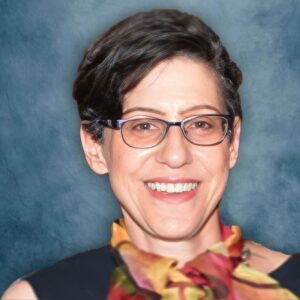
I’m Sheri
I’m a Board Certified Registered Art Therapist (ATR-BC®) and Licensed Professional Art Therapist (LPAT) with more than 30 years of experience helping children, teens, adults, and families find meaningful ways to cope, express what’s hard to put into words, and better understand themselves.
I believe there are times when talking is exactly what we need—and other times when words alone don’t quite capture what we’re experiencing.
That can be especially true for children and teens, who may know that something feels big, confusing, scary, frustrating, or just plain hard without always knowing how to explain it.
That’s where creativity can offer another way in.
Through art therapy and creative self-expression, I help clients explore thoughts and emotions, make sense of difficult experiences, discover strengths, and develop new ways of responding to what life is asking of them.
When You—or Your Child—Feel Easily Overwhelmed
You—or your child—may experience things a little more intensely.
For children and teens, that might look like big reactions after a long day, becoming overwhelmed by changes or transitions, anxiety that makes it hard to get out the door or go to school, or difficulty navigating friendships. For adults, it may look more like feeling easily overstimulated, emotionally drained, anxious, or overwhelmed when life asks too much at once.
I especially enjoy working with children, teens, and adults who tend to take in a lot of what’s happening around them and can become overwhelmed before they quite know what they need.
Through art making, conversation, and creative problem-solving, I help you better understand your reactions, recognize your own cues, and find different ways of responding so stressful situations begin to feel more manageable.
My approach is warm, empathic, and strengths-based. There’s room to explore what you’re experiencing without pressure to have the right words—or all the answers.
Art Therapy With a Purpose
Art therapy isn’t about being “good at art.”
You don’t need artistic talent, and your child doesn’t need to consider themselves creative.
Instead, we use the creative process intentionally to support emotional expression, coping, insight, confidence, and growth.
For children, art can offer a natural way to communicate experiences that may be difficult to explain directly. Creating can help them slow down, notice feelings, explore problems, practice coping skills, and sometimes show us something they weren’t quite able to say.
For teens and adults, the creative process can provide another perspective on patterns, relationships, emotions, and experiences that may feel difficult to untangle through conversation alone.
Depending on what brings you in, our work might focus on anxiety and overwhelm, emotional regulation, self-esteem, perfectionism, motivation, chronic illness, family stress, difficult life experiences, or adjusting to change.
And while art can be an important part of our work, therapy with me isn’t only about making art. We can talk, create, reflect, problem-solve, or combine approaches depending on what feels most useful.
After more than three decades of doing this work, I continue to value what can happen when people of all ages are given a safe space to explore, create, and discover something new about themselves.
Sometimes we find the words. Sometimes we make something first—and the words come later.
After receiving my Bachelor’s degree in Art Therapy with highest honors from The College of New Jersey, I went on to earn my Master’s degree in Art Therapy, also with highest honors, from George Washington University.
While at GWU, I completed intensive internships at Walter Reed Army Medical Center and St. Elizabeths Hospital in Washington, D.C. These experiences provided an important foundation for the career that followed. At St. Elizabeths, I had the opportunity to learn in a renowned teaching environment with leaders in psychiatry and mental health from across the country.
I was later honored to work at St. Elizabeths myself, in a setting with deep historical roots in art therapy, sociometry, psychodrama, and dance/movement therapy. Working with diverse individuals with a wide range of mental health needs strengthened my passion for art therapy and inspired me to begin creating and directing programs of my own.
I went on to pioneer an art therapy program at the Episcopal Center for Children, a private residential and day school in Washington, D.C.
When I returned to my home state of New Jersey, I created and directed the Art Therapy Program at Hampton Hospital in Westampton, where I worked on both the Evaluation and Addictions Units. I later served as an Art Therapy Consultant at Kennedy Hospital in Cherry Hill, working with adults as well as children and adolescents in inpatient settings.
Eventually, I created and directed the art therapy program at Garfield Park Academy, a special education school in Willingboro, New Jersey. I was honored to receive the ASAH Related Services Provider of the Year Award, selected from more than 100 candidates representing special education schools throughout New Jersey.
One of the most meaningful parts of looking back on my career is knowing that many of the programs I helped establish continued to grow after I moved on.
I like to think of those early programs as seeds—and I’m delighted that art therapy has continued to take root in the places where I was fortunate enough to plant them.
Stress & Anxiety
For children, teens, and adults who feel overwhelmed, worried, tense, or stuck in cycles of overthinking. Art therapy can offer another way to slow things down, express what feels hard to explain, and build practical coping skills.
Sensory Soothing & Emotional Regulation
For clients who become easily overwhelmed, overstimulated, tense, or emotionally flooded. You or your child may notice that once things become “too much,” it can be hard to know what you need or how to settle again. Art materials and creative activities can provide a hands-on, sensory way to slow things down, recognize cues earlier, and practice ways of responding that help the body and emotions feel more manageable.
Depression & Low Motivation
Helping clients navigate low mood, withdrawal, reduced motivation, and feeling disconnected from themselves or the things they usually enjoy. Creative expression can help make internal experiences more visible and create small openings for movement and change.
Chronic Illness & Health-Related Stress
Supporting children, teens, adults, and families coping with the emotional impact of chronic illness, medical treatment, changing abilities, uncertainty, and the stress that can come with living alongside ongoing health concerns.
Family Art Therapy
Using creative activities to help family members communicate, understand one another differently, strengthen connection, and explore patterns that may be difficult to address through conversation alone.
Trauma & Difficult Life Experiences
Providing a supportive space to process difficult or overwhelming experiences at a pace that feels manageable. Art therapy can provide an additional avenue for expression when experiences are difficult to put into words.
Life Transitions & Major Change
Support through moves, losses, changing family roles, school or career transitions, health changes, and other moments when life looks different than it used to and you’re figuring out what comes next.
- Licensed Professional Art Therapist (NJ State Board of Licensing)
- Board Certified Art Therapist (National Certification by Art Therapy Credentials Board)
- Registered Art Therapist – American Art Therapy Association
- Art Therapist / Art Therapist Consultant for various hospitals including: National Institute of Mental Health- St. Elizabeth’s Hospital, Hampton Hospital, Kennedy Hospital
- Certified New Jersey K-12 Art Teacher
- Practicing Professional Artist with gallery representation in NJ Selected for juried-individual, dyad and group shows
- Master’s Degree in Art Therapy from George Washington University
- Bachelor of Arts in Art Therapy from College of New Jersey (Trenton State)
I really do practice what I preach when it comes to creativity, mental health, and wellness.
Some of my favorite moments happen outdoors. I love hiking with family and friends, and those experiences often find their way into my paintings. Painting a place I’ve visited gives me a chance to slow down, notice the details, and savor the experience all over again.
Although I enjoy painting landscapes and places I’ve traveled, my favorite subjects are portraits and figure drawings. I’m happiest when I’m creating because, for me, art is always a little bit about problem-solving.
A mark I didn’t intend to make or an old painting that didn’t quite work may become the beginning of something completely new. Those “happy accidents” often push me to look again, think differently, and imagine another possibility.
And my creativity definitely doesn’t stop at the canvas. I have a bit of an obsession with fabrics and textiles and can often be found designing or sewing my own clothes.
I believe art is everywhere if we take the time to really notice it—the way light falls across an object, how a shadow changes what we see, the way color shifts, or how something familiar can suddenly look completely different from another angle.
In many ways, I think therapy asks us to do something similar.
We slow down. We notice. We look again. And sometimes, with a little distance and a fresh perspective, we begin to see possibilities that weren’t visible before.
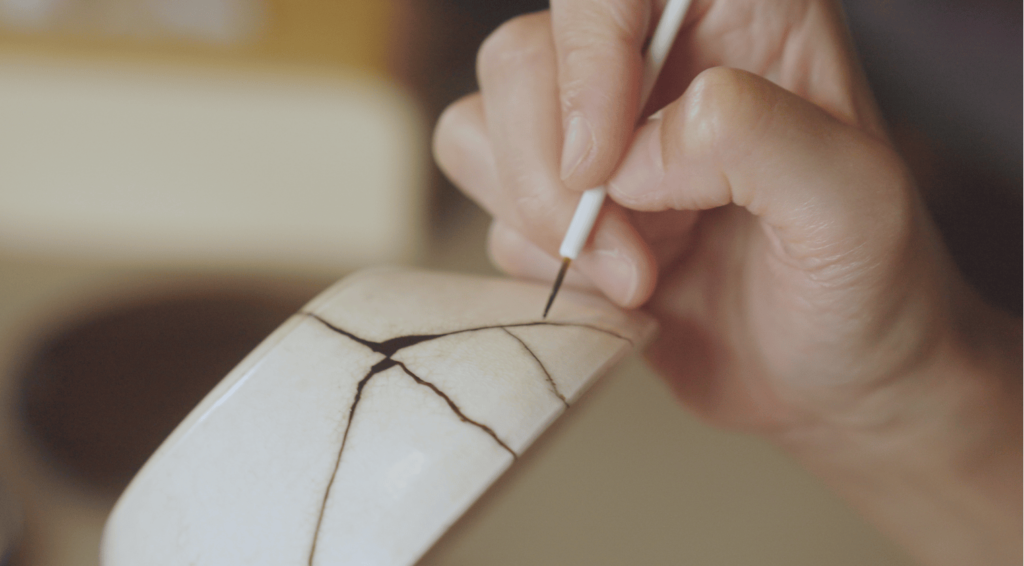
Discover a hands-on, healing workshop experience that
celebrates imperfection, resilience, and
emotional renewal through the
Japanese philosophy of Kintsugi.
In this reflective art experience, you’ll create, deconstruct, and reimagine — using visual expression as a way to
explore what’s been overlooked,
untended, or quietly
calling for your attention.
Through this process, we
honor the beauty in what’s been reshaped
I want you to feel known here. I listen closely, remember the things that matter to you, and hold onto the little details that help me understand the bigger picture. Our work grows from session to session, so you can feel supported, understood, and connected to the progress you’re making.
Sheri
Think we might be a good fit?
If what you’ve read here sounds like the kind of support you’re looking for, let us know you’re interested in meeting with me. Reach out and Courtney can help with scheduling and answer any questions about getting started.