

Move-in day can look exciting on the outside. College transition anxiety can also stir a real sense of loss as your young adult leaves familiar people, routines, and small safety nets that once caught them without much thought. This anxiety is common, but it isn’t something to brush aside or solve with a cheerful speech about how great college will be. Your student may feel proud, scared, homesick, and ready to go, sometimes within the same hour.
TL;DR:
- College transition anxiety can include homesickness, self-doubt, academic stress, and difficulty managing new routines; it does not automatically mean a student is unprepared.
- Independence grows through practice. Before move-in, help your student rehearse planning, chores, basic meals, appointments, communication, and other everyday tasks.
- Simple anchors for sleep, food, movement, study time, and connection can lower uncertainty and make coping skills easier to use.
- Create a support plan before a crisis by identifying campus counseling services, student health resources, trusted people, and after-hours help.
- Support your student without taking over: listen, help them identify one next step, and seek professional support when anxiety interferes with daily life, safety, or basic care.
College Transition Anxiety Is More Than Homesickness
When high school ends, familiar supports disappear: a predictable schedule, adults who notice a missed assignment, family meals, and friends who know the backstory. Homesickness may follow, but college also brings new decisions, logistics, and relationships.
Why the adjustment period can feel so intense
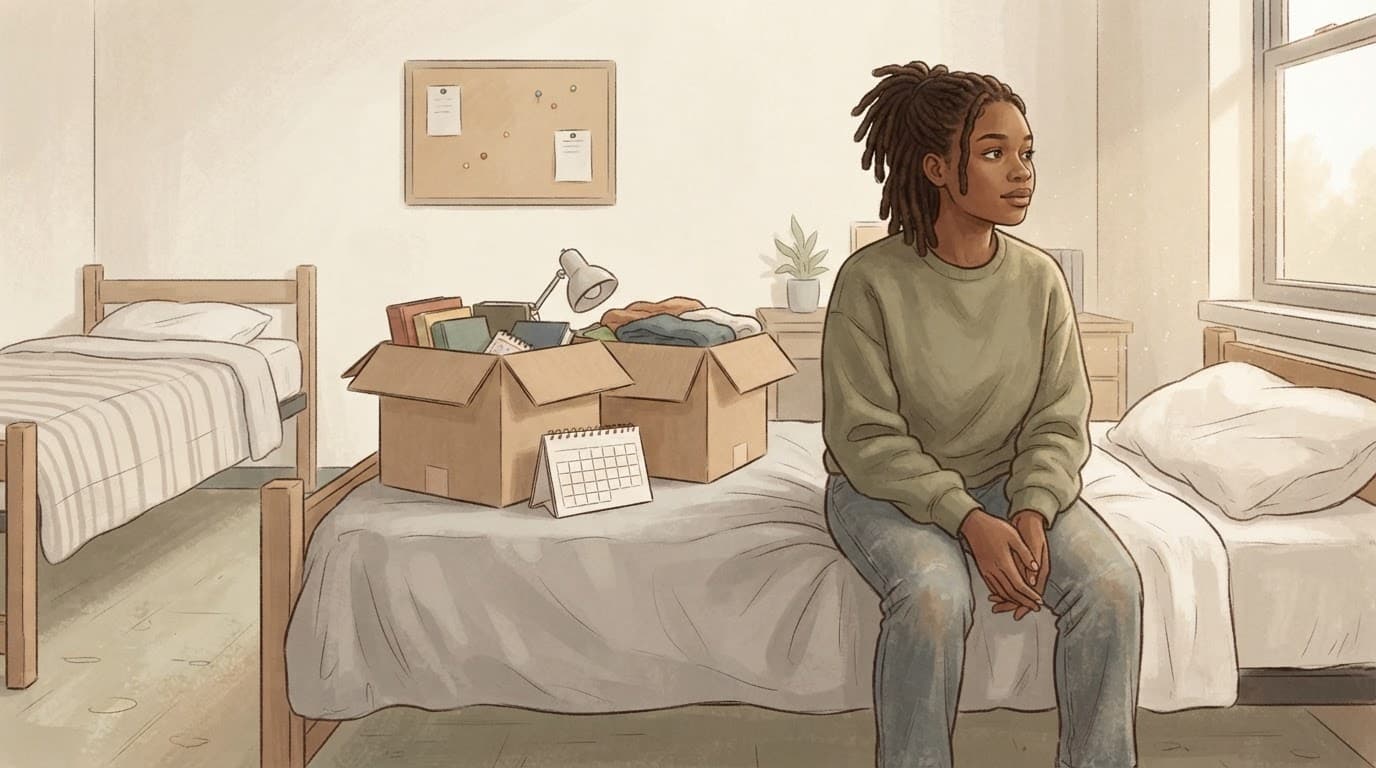
This reaction is not a diagnosis or proof that your student isn’t ready. It is often a normal nervous-system response to uncertainty, separation, and homesickness. Academic pressure can begin before they understand a professor’s expectations or the pace of college coursework. A late-night roommate, an unanswered text, or a messy shared kitchen can feel huge when sleep is short and home feels far away. An APA report on campus mental health noted that more than 60% of college students met criteria for at least one mental health problem during the 2020-21 school year. That finding isn’t a diagnosis for every student, but it shows why early mental health support matters.
Signs that call for a closer look
An anxious student does not always look worried. You may see missed classes, procrastination that has become paralysis, sleeping all day or barely sleeping, a sharp change in appetite, frequent headaches or stomachaches, or pulling away from peers because of social anxiety. Look for a pattern that interferes with daily life, rather than treating one sign, one tearful call, or one bad week as proof that college is wrong. Ask calmly, “What has been hardest to start?” or “What are you avoiding because it feels too big?”
If your student cannot manage basic care, is using substances to cope, talks about hopelessness, or mentions self-harm, seek professional support promptly; the school’s counseling and psychological services may be one route when symptoms interfere with basic functioning or safety.
Build Independence Before Move-In Day
Independence grows through repetition, not one emotional goodbye. Before the transition to college, have your student practice tasks that will fill a Tuesday night in October.

Executive function skills make freedom manageable
Executive functioning helps a person begin tasks, plan ahead, and hold information in mind through working memory. It also supports cognitive flexibility, or adjusting when plans fail. A bright, capable student can struggle with these skills when anxiety is high or structure drops away. Instead of buying another planner and hoping it sticks, help your student build one system that develops time management skills. They can check their calendar each morning, write three realistic priorities, and set reminders for assignments, medication, laundry, and meals. If starting tasks or maintaining the system remains difficult, executive function coaching offers another practical resource. Your student still chooses and practices the system.
Research on college mental health transition practices treats mental health promotion as part of the move into college, not an afterthought once things fall apart.
Practice the chores that create confidence
Rehearsal takes the shame out of a first mistake. Before move-in, practice a few skills that support independent living:
- Have your student schedule an appointment, fill a prescription, and ask a question when the answer is unclear.
- Let them make a simple grocery list, compare prices, and prepare two basic meals.
- Ask them to wash laundry, track a small weekly budget, and handle a lost key or dead phone battery.
- Have them email an instructor or supervisor about a problem before you step in.
These are not tests of maturity; repeated practice builds coping skills. It teaches your student that discomfort can be handled one small action at a time.
Use Daily Routines to Lower the Noise
Anxiety feeds on uncertainty. Daily routines can serve as a practical stress management tool by reducing the number of decisions a stressed student must make. They won’t make college predictable, but they can keep ordinary stress from turning every decision into a crisis.
Anchor sleep, food, movement, and connection
Encourage your student to start with a few anchors instead of a picture-perfect schedule: a usual wake-up range, breakfast or another early meal, a place to study, regular movement, and one dependable social contact each week. These self-care practices should fit their actual class schedule, not an ideal version of them. Sleep deserves attention because a tired brain reads more situations as threatening. Late nights will happen, but repeated sleep disruption, skipped meals, and isolation can make stress and anxiety louder. The College Mental Health Toolkit from The Mental Health Coalition offers practical resources your student can use alongside campus support.
Help them answer self-doubt with evidence
Anxious thoughts tend to speak in absolutes: “Everyone else knows what they are doing,” “I will fail this class,” or “If I call home, I am proving I cannot do this.” Don’t argue those thoughts away with, “You will be fine.” Teach a gentler question: “What facts support this thought, and what facts do not?” Then ask, “What is one next step I could take even if I still feel nervous?” These repeatable actions become coping skills your student can use when worry returns. Confidence often arrives after your student takes the next small action, not before. That is cognitive reframing in daily language. It does not deny a hard reality. It loosens the grip of a prediction that has been mistaken for a fact.
Make a Support Plan Before a Crisis
Your student needs a concrete support system, not just your phone number. Build a short list of people and places they can use when they feel stuck, sick, overwhelmed, or unsafe.
Find campus counseling services early
Before the first semester begins, look up the school’s counseling and psychological services, often called CAPS. Ask how appointments work, whether brief therapy is available, how after-hours care works, and where to find referrals if demand is high. Have your student save contact information for campus counseling services and student health services on their phone. Many students wait until they’re overwhelmed because they think their problem isn’t serious enough. An introductory appointment can help them choose the right level of mental health support. Options may include a support group, a mental health counselor, medication follow-up, or cognitive behavioral therapy. If your student talks about self-harm or can’t stay safe, seek professional support immediately. Call or text 988 in the United States, contact local emergency services, or use the campus emergency option.
Stay connected without taking over
Set a check-in rhythm together, perhaps a call on Sunday and a few low-pressure texts during the week. Point them toward peer support programs and supportive campus communities, too. Asking, “Do you want comfort, ideas, or help making a plan?” teaches your student to name what they need. Try to resist rescuing them from every uncomfortable conversation, missed deadline, or roommate problem. You can listen, slow the moment down, and help them choose a next step without sending the email or calling the office yourself. A daily rescue call can soothe anxiety in the moment while teaching your student that they cannot handle distress without you. You are not withdrawing support. You are giving them room to use it.
Handle the First Semester One Week at a Time
The first semester rarely moves in a straight line. A good first week can be followed by a rough third week, especially when assignments increase and the excitement of move-in fades.
Treat setbacks as information
College transition anxiety often gets worse when a student decides one lonely Friday or poor quiz grade explains the rest of the year. Help them examine what happened instead. What might the grade reveal about current academic performance? Was the assignment unclear? Has sleep slipped? Is there a professor, resident adviser, tutor, or friend they can contact? Set one weekly reset. Reviewing deadlines, chores, and stressors are your child’s reusable coping skills. Have your child choose a time for laundry and groceries, notice what caused stress, and make one repair. If they can’t maintain the reset independently, executive function coaching may help. A parent can ask what would help without managing the schedule. This gives executive function a place to live, instead of turning it into a personality test.
Independence Is Not Doing Everything Alone
Independence isn’t measured by whether your student feels calm on move-in day. It grows when they feel anxious, use a skill, reach for support, and take the next small step. Your steady presence still matters, even when you’re no longer solving every problem. Routines, practiced life skills, and a clear support plan can help college transition anxiety become part of an adjustment period, not the whole story. The University of Michigan’s 2025 Healthy Minds update reported a third straight year of improvement in student anxiety and depression symptoms. That is encouraging, but no campus-wide trend can tell you what your own student needs today. Continue to help your child build skills, practice them, and then practice them with fewer prompts, guidance, and direct problem-solving from you. That is the kind of confidence that can travel with them.

J. Oni Dakhari, PsyD
ABOUT THE AUTHOR: J. Oni Dakhari, PsyD, is a clinical and pediatric psychologist who loves languages, is an avid traveler, and finds boundless excitement in the pursuit of knowledge and helping others.
Health Information Disclaimer: Attention Required
No content on this site, or any of the references or links, should ever be used as a substitute for direct medical advice from your doctor or other qualified clinician. The content of the blog, including any references, resources, links, or other shared knowledge, is for informational purposes only. No content whatsoever should be taken as a replacement for medical, clinical, professional advice, diagnosis, intervention, or treatment. Any action or inaction as a result of any content you consume, including within the blog, references, resources, links or other associated knowledge, is done solely at your discretion.
The blog author and associated professionals cannot be liable for any of the consequence of such action or inaction. Accessing or using any of the content of the blog, including any references, resources, links, or other shared knowledge does not create a doctor-patient relationship between the author or associated professionals and you. If you choose to contact the blog author or any associated professionals of Dakhari Psychological Services, LLC to provide personal, medical, or clinical information, this does not create a doctor-patient relationship. It’s crucial to consult with a qualified healthcare provider for individualized advice regarding your health concerns.
Affiliate Disclosure Disclaimer:
Please note this post may contain affiliate links. This means I may receive a commission if clicked at no extra cost to you.