

Your child feels sick to their stomach before school again. Or your teen freezes at the idea of talking to a classmate. You want to help, but you also feel your own anxiety rise.
You are not alone. Anxiety and big feelings can be quite common in kids and teens, and many anxious parents are raising anxious kids. The good news is that you can use practical CBT-inspired tools to support your child without needing a psychology degree.
One of the most practical tools is the exposure ladder. An exposure ladder is a list of small, planned steps that help your child face a fear gradually instead of all at once. Each step brings a bit of discomfort, but not so much that it feels impossible.
In this post, you will learn what exposure ladders are, how they fit into a plan to tackle anxiety, and how to build your own. You will also see concrete exposure ladder examples, along with ideas for supporting yourself if you consider yourself an anxious parent.
This post is educational, not therapy or medical advice. If your child’s anxiety is severe or risky, you may want to work with a licensed mental health professional who can tailor a plan.
Understanding Exposure Ladders: A Gentle CBT Tool for Parents
If terms like ‘CBT’ and ‘exposure ladder’ feel unfamiliar, you can think of an exposure ladder as “practice with a plan.”
You and your child choose one fear, break it into smaller steps, and practice those steps over time. Cognitive Behavioral Therapy (CBT) shows how thoughts, feelings, and behaviors are connected. Your child can learn to spot specific worries, then turn that fear into small, planned steps that gently test the worry and gather real-world evidence about what actually happens. Over time, these small experiments help your child see that thoughts are not always facts and that they can feel anxious and still move toward what matters.
Exposure ladders often sit inside a larger plan to reduce worry and anxious behaviors. They work best when paired with other supports, like good sleep, movement, calming skills, and clear routines. Over time, parents often notice they feel more confident and capable, not just with anxiety, but with their child’s whole emotional world.
How Exposure Ladders Work to Reduce Anxiety Over Time
Anxiety tells your child, “This is too much. You have to get out now or not face the situation at all.” Exposure ladders give them a way to gently test that message in small, planned, safe steps.
Here is the basic pattern:
- You choose a step that feels a little scary, not overwhelming.
- Your child stays in the situation long enough for the fear to peak and then drop. (NOTE: If this step keeps falling apart or feels too hard to do on your own, reaching out to a licensed mental health professional is a smart next step. Getting guidance here really matters, because it is easy to accidentally strengthen anxiety instead of loosening its grip.)
- You repeat that step several times, like practice reps.
The goal is not to erase fear forever. The goal is to help your child learn, “I can feel anxious and still do this,” and “If I stay, my anxiety usually comes down on its own.”
You might call this “tolerable discomfort.” Your child feels it, but can still think, talk, and move.
When an Exposure Ladder Might Be Helpful for Your Child
Exposure ladders can help with many types of anxiety, such as:
- School refusal or intense morning distress
- Separation worries, like trouble going to sleepovers or staying in their own bed
- Social anxiety, like avoiding peers or class participation
- Performance or test anxiety
- General habits of avoiding anything that feels hard or uncomfortable
Rather than focusing only on the exact fear, it helps to notice patterns of escape. Does your child often shut down, argue, or bargain to get out of things? Those are clues that exposure ladders might help.
You can adapt this tool for kids of all ages, for a young adult child, or even for yourself as an anxious parent.
If school is a big trigger in your home, you might also find our Back-to-School Mental Health Checklist for Kids helpful for ideas about daily support.
Collaboration: What Makes Exposure Helpful, Not Harmful
Effective exposure is not about tricking or forcing your child. It is about teamwork.
Key points to keep in mind:
- Get buy-in: Explain the plan in age-appropriate language and ask your child to help design the steps.
- Stay in the “hard but doable” zone: Steps should feel challenging, not crushing.
- Watch for panic: If your child’s distress stays very high and does not ease over time, the step is probably too big.
- Check in often: Before, during, and after each step, ask how their body feels, what thoughts pop up, and what surprised them.
When you approach exposure collaboratively, your child learns that you care about their feelings and their growth. This also helps you build a steady sense of confidence and agency as a parent.
How to Build an Exposure Ladder for Your Child: Step-by-Step
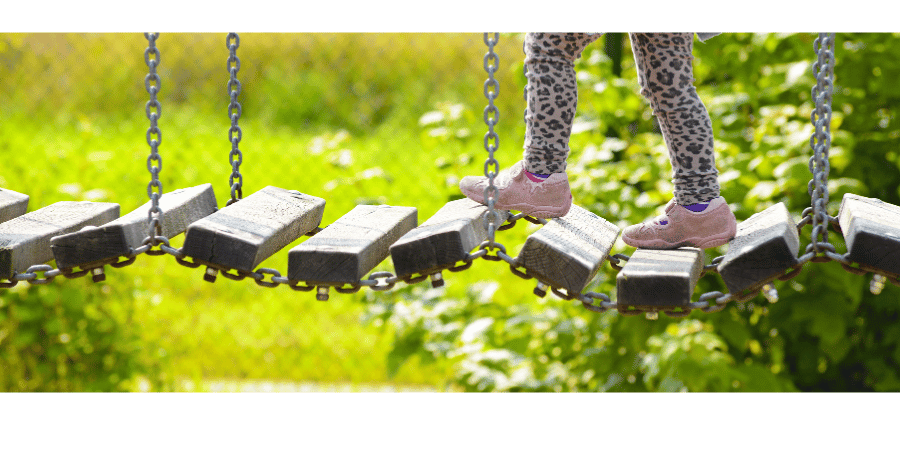
You can create an exposure ladder even if you feel anxious or unsure. Think of it as a shared project, not a perfect plan you need to get right the first time.
Step 1: Choose One Clear Fear or Avoided Situation
Start with one focus instead of trying to fix all anxiety at once. Some common starting points are:
- Sleeping alone in their own bed
- Going to school (or class) on time — even when anxious
- Ordering their own food at a restaurant
- Saying “I disagree” respectfully
- Emailing the teacher or professor for extra help
- Attending an appointment independently
Choose something that is truly safe, even if it feels scary. If your child has many intense fears, you might begin with a smaller one to build confidence for both of you.
Step 2: Break the Fear into Small, Realistic Steps
Next, list steps from easiest to hardest. It often helps to use a simple fear scale, such as:
- 0 = no fear
- 10 = out-of-control panic
You want steps that climb slowly, maybe 2 or 3 points apart, instead of big leaps, like from 2 to 9.
You can create more steps by adjusting:
- Location: home, yard, car, school, store
- Distance: across the room, a few feet away, right next to
- Time: 1 minute, 5 minutes, 15 minutes
- Independence level: with you right there, in the next room, on call by text
Write your ladder down so you and your child can look at it together.
Step 3: Plan Supportive Coping, Not Just Reassurance
Anxiety can easily pull parents into endless reassurance. Exposure ladders give you a new way to support your child.
You can plan coping tools for each step, such as:
- Box breathing (inhale 4, hold 4, exhale 4, hold 4)
- Naming 5 things they can see, 4 they can feel, 3 they can hear
- Short, kind self-talk, like “I can handle hard things for 2 minutes”
- Micro-Actions That Build Mastery (i.e., Make the phone call without scripting it fully, Stay 30 seconds longer than you want to)
- A small comfort item at the easier steps
The long-term goal is less avoidance and less dependence on reassurance, not zero support. Your presence, calm tone, and belief in your child’s courage matter a lot.
Praise effort, not just outcomes. For example, “You stayed in the classroom even when your stomach hurt,” or “You spoke up even though your heart was racing.” This is especially helpful for perfectionistic or high-pressure kids.
Step 4: Practice, Track Progress, and Adjust the Ladder
Exposure works through repetition. Most kids need to repeat each step a few times until their distress rating drops.
You might:
- Use a simple sticker chart for younger kids
- Keep notes in a shared journal
- Track ratings in a notes app with teens
If a step feels too easy, you can move on sooner. If a step is too hard, break it into two smaller steps.
You will likely see change in tiny, almost boring shifts: a shorter meltdown, less arguing, a quicker recovery. Over time, these small shifts can add up to big changes in how your child handles fear.
If you want more ideas about starting with tiny, doable changes, you can read our post: Tiny Commitments, Big Shifts: How Small Daily Actions Shape Your Future Self.
Practical Exposure Ladder Examples for Kids and Teens
Here are concrete exposure ladder examples you can adapt to your own. Use them as templates, not strict rules.
Example 1: School Anxiety and Morning Refusal
Goal: Attending a full school day without repeated refusal.
Possible steps:
- Talk about school for 5 minutes while rating anxiety.
- Look at pictures of the school or classroom.
- Drive by the school after hours and sit in the parking lot.
- Walk around the school grounds on a weekend.
- Walk to the entrance on a quiet afternoon and stand there for 2 minutes.
- Go inside when the building is mostly empty and visit the classroom.
- Attend one short period with a parent or trusted adult nearby.
- Attend a half day while the parent waits in the building.
- Attend a half day with the parent at home but available by text.
- Attend a full school day with a pre-planned check-in at home time.
At each step, you validate feelings (“It makes sense that mornings feel hard”) and then return to the plan. You are not forcing or giving up; you are guiding.
For broader ideas on school stress and daily habits, you can also explore our Back-to-School Mental Health Checklist for Kids.
Example 2: Social Anxiety and Talking to Peers
Goal: Feeling more able to start or join conversations with peers.
Sample ladder:
- Make brief eye contact with a classmate.
- Nod or smile at a familiar peer.
- Say “hi” to one classmate in the hallway.
- Ask a simple question in class, such as “Is this due tomorrow?”
- Send a short text to a friend or classmate.
- Comment once in a group chat.
- Join a small group activity for 5 to 10 minutes.
- Sit with a trusted peer at lunch for part of the period.
- Go to a small social event and stay for 20 minutes.
- Stay longer at an event or start a short conversation with someone new.
Age, culture, and personality all shape the steps. Highly sensitive or perfectionistic kids may need more time at each level and more say in how fast they climb.
Example 3: Sleeping Alone Exposure Ladder
Goal: Falling asleep in their own bed with growing independence.
You might organize steps by “easy uncomfortable,” “medium uncomfortable,” and “hard uncomfortable.”
Easier steps:
- You sit in a chair close to the bed while they settle.
- You sit farther from the bed, perhaps by the door.
- Your child practices lying in bed for 2 to 5 minutes while you stay in the room.
Medium steps:
- You sit in the hallway where they can still see you.
- You check in every 3 to 5 minutes instead of staying in the room.
- Your child falls asleep with a dim hallway light on, while you are in the next room.
Harder steps:
- You do the bedtime routine, tuck in, say goodnight, then go downstairs.
- Your child stays in bed while you are in another part of the home.
- Your child falls asleep fully on their own most nights.
You can add rewards like a special breakfast, a morning note, or extra story time for effort, not for perfection.
Example 4: Exposure Ladder for a Teen or Young Adult Launching
Goal: Building independence for a teen or young adult who feels anxious about “launching.”
Sample ladder:
- Practice calling to order food while you sit nearby.
- Send an email to a teacher or professor about a simple question.
- Make a short appointment phone call, such as a haircut, with you in the room.
- Go into a store, buy one item, and interact with the cashier.
- Attend office hours or meet with a teacher for 5 to 10 minutes.
- Spend 1 to 2 hours on campus or at a job site while you are available by text.
- Stay alone in the apartment or dorm for an afternoon.
- Handle a basic task, like laundry or groceries, from start to finish.
- Spend one night away from home in a dorm, with a friend, or in a safe new setting.
- Stay several days in the new setting while using coping skills and planned check-ins.
This kind of ladder helps teens and young adults practice adult tasks in bite-size ways, and it also helps you, as a parent, practice letting go step by step.
Adapting These Examples to Your Child’s Age and Temperament
You know your child best. Every exposure ladder can and should be adjusted.
For younger kids, you may use playful language, stories, or simple pictures for each step. Rewards might be stickers, small privileges, or shared play.
For tweens and teens, invite more collaboration and choice. Let them suggest steps, pick coping tools, and track progress. Rewards can be more independence or extra time on activities they value.
Some kids are more intense, sensitive, or strong-willed. With these kids, you may need smaller steps, slower pacing, and more voice in when to move up or pause.
Treat your exposure ladders as living documents. You and your child can cross things out, add new ideas, and celebrate small wins along the way.
You’re ambitious and already doing a lot—make sure your wellness isn’t an afterthought. Drop your email below to subscribe and get new blog posts with practical, evidence-backed wellness tips you can start using today—no inbox overload, unsubscribe anytime. (For info only; not a substitute for professional advice.)

Helping Your Child (and Yourself) Through the Process
Exposure is not just about behavior. It is also about connection and emotional support, for your child and for you.
Coaching Your Child with Calm, Curiosity, and Compassion
Your calm presence can be a powerful support.
You might say things like:
- “It makes sense that this feels scary.”
- “Let’s see what happens if we stay for 3 minutes.”
- “What did you notice in your body by the end?”
- “What did you handle better than you thought you would?”
Short check-ins after each step help your child notice progress that anxiety tries to hide. Stay curious instead of arguing with the fear. Curiosity softens shame and keeps the door open.
Over time, you build a steady, grounded confidence in your ability to support your child’s feelings, not just fix behavior.
Managing Your Own Anxiety as an Anxious Parent
If you feel anxious, perfectionistic, or high-pressure, exposure work can stir your own worries. You might feel a strong urge to rescue, to avoid, or to rush the process.
Start by noticing your own body signals. When you want to jump in and stop your child’s discomfort, pause for one breath. Ask yourself, “What small step can I take to support courage instead of escape right now?”
Small shifts in your response can lead to big changes in how your child handles anxiety. If you want more structure for this, you might be interested in our Worry Spiral Toolkit for Parents, which focuses on understanding the anatomy of a worry spiral and gives you scripts and strategies to interrupt anxious spirals.
You are doing exposure too, in a way: you are facing your fear of your child’s distress and learning that you can handle it.
Final Thoughts
There’s no perfect ladder.
No perfect pace.
No perfect parent.
If you’re helping your child face fear even in tiny ways, you are already doing brave work alongside them.
Exposure ladders are a practical, parent-friendly way to support anxious kids. By using simple exposure ladder examples, you can create an evidence-based approach that focuses on steady, small steps instead of dramatic, all-or-nothing changes.
You choose one fear, break it into smaller steps, practice with coping tools, and adjust as you go. Along the way, you build your own sense of confidence and skill in supporting your child’s emotional world.
This post is for education only, not a substitute for therapy or medical care. If your child’s anxiety is severe, involves safety risks, or does not improve, consider reaching out to a licensed mental health professional for more support.
You might start today by naming one fear with your child and brainstorming three possible ladder steps. Keep it small, kind, and curious.
If you would like more ideas about starting with small, doable shifts, you can gently explore tiny commitments and big shifts. Every small step you take is a message to your child: “We can face this together.”

J. Oni Dakhari, PsyD
ABOUT THE AUTHOR: J. Oni Dakhari, PsyD, is a clinical and pediatric psychologist who loves languages, is an avid traveler, and finds boundless excitement in the pursuit of knowledge and helping others.
Health Information Disclaimer: Attention Required
No content on this site, or any of the references or links, should ever be used as a substitute for direct medical advice from your doctor or other qualified clinician. The content of the blog, including any references, resources, links, or other shared knowledge, is for informational purposes only. No content whatsoever should be taken as a replacement for medical, clinical, professional advice, diagnosis, intervention, or treatment. Any action or inaction as a result of any content you consume, including within the blog, references, resources, links or other associated knowledge, is done solely at your discretion.
The blog author and associated professionals cannot be liable for any of the consequence of such action or inaction. Accessing or using any of the content of the blog, including any references, resources, links, or other shared knowledge does not create a doctor-patient relationship between the author or associated professionals and you. If you choose to contact the blog author or any associated professionals of Dakhari Psychological Services, LLC to provide personal, medical, or clinical information, this does not create a doctor-patient relationship. It’s crucial to consult with a qualified healthcare provider for individualized advice regarding your health concerns.
Affiliate Disclosure Disclaimer:
Please note this post may contain affiliate links. This means I may receive a commission if clicked at no extra cost to you.